Communication Solution for Fire Alarm Control Systems in Wind Power Plants
Release date:
2025-10-11
Source:
Author:
With the development of new energy power systems and the increasing adoption of fire alarm control systems in wind power generation, the construction of robust communication networks has become critical for ensuring reliable data transmission, seamless security monitoring, and enhanced operational efficiency across the entire fire alarm system. However, these systems often operate in harsh environmental conditions, necessitating the use of managed, wide-temperature serial servers and industrial Ethernet switches to provide dependable network support. Specifically, fire alarm systems in wind farms place stringent demands on network equipment.
Communication Solution for Fire Alarm Control Systems in Wind Power Plants
Project Overview
With the development of new energy power systems and the increasing adoption of fire alarm control systems in wind power generation, the construction of robust communication networks has become critical for ensuring reliable data transmission, seamless security monitoring, and enhanced operational efficiency across the entire fire alarm system. However, these systems often operate in harsh environmental conditions, necessitating the use of managed, wide-temperature serial servers and industrial Ethernet switches to provide dependable network support. Specifically, fire alarm systems in wind farms place stringent demands on network equipment.
- Wind power plants operate in harsh environments with significant day-night temperature fluctuations and severe sandstorms, requiring operational temperatures of -45 to 85°C, storage temperatures ranging from -45 to 85°C, and storage humidity levels between 0% and 95%, with no condensation allowed.
- The electromagnetic environment is harsh, requiring the industrial serial server and switch to feature robust electromagnetic interference resistance and an extended mean time between failures.
- To ensure reliable communication, it is necessary to establish a redundant ring network with minimal self-healing time. In the event of a communication network failure, the system should seamlessly switch over to the redundant backup lines.
- To ensure the security of remotely monitored data, the switch must have comprehensive network security settings.
Communication Network Design Plan
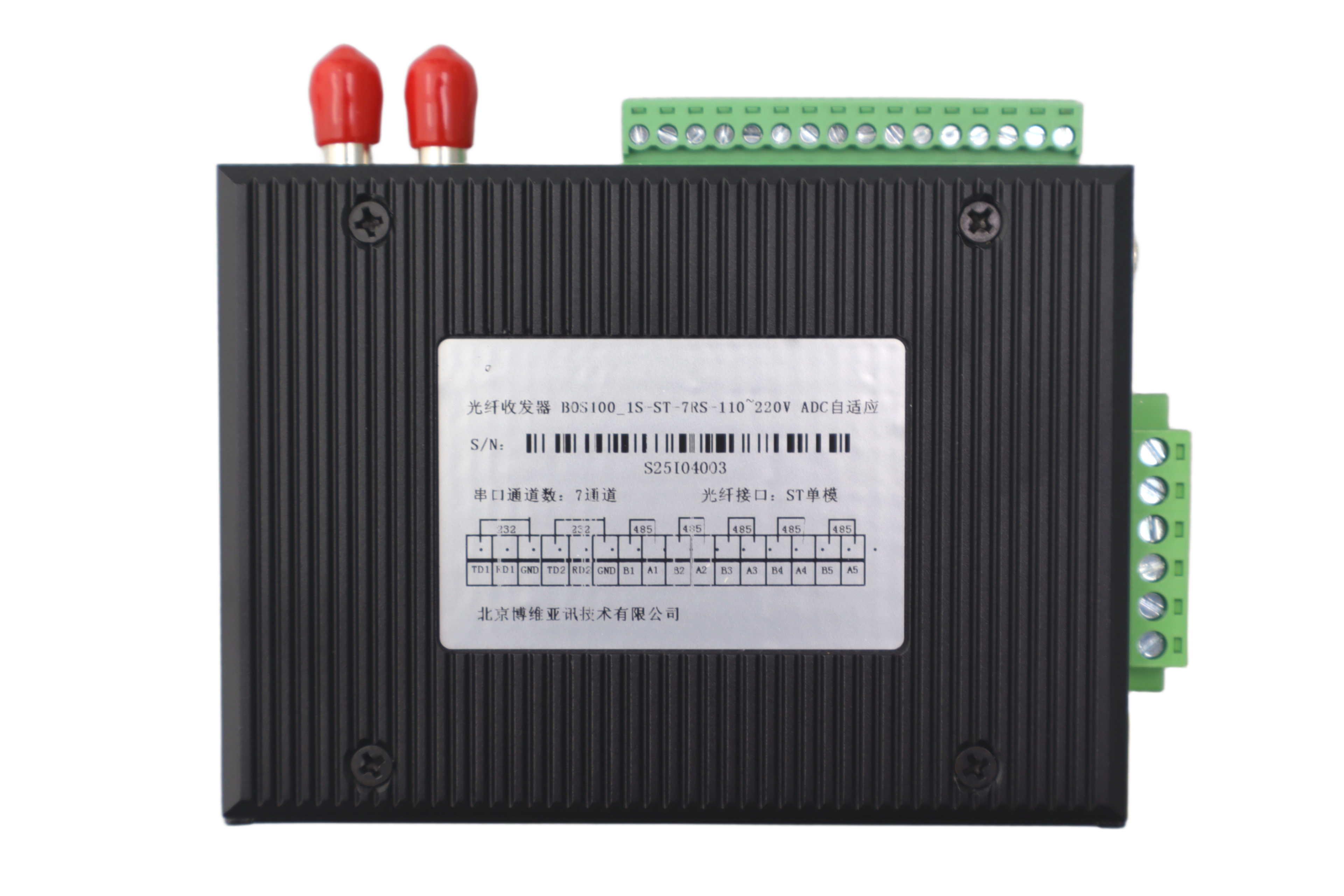
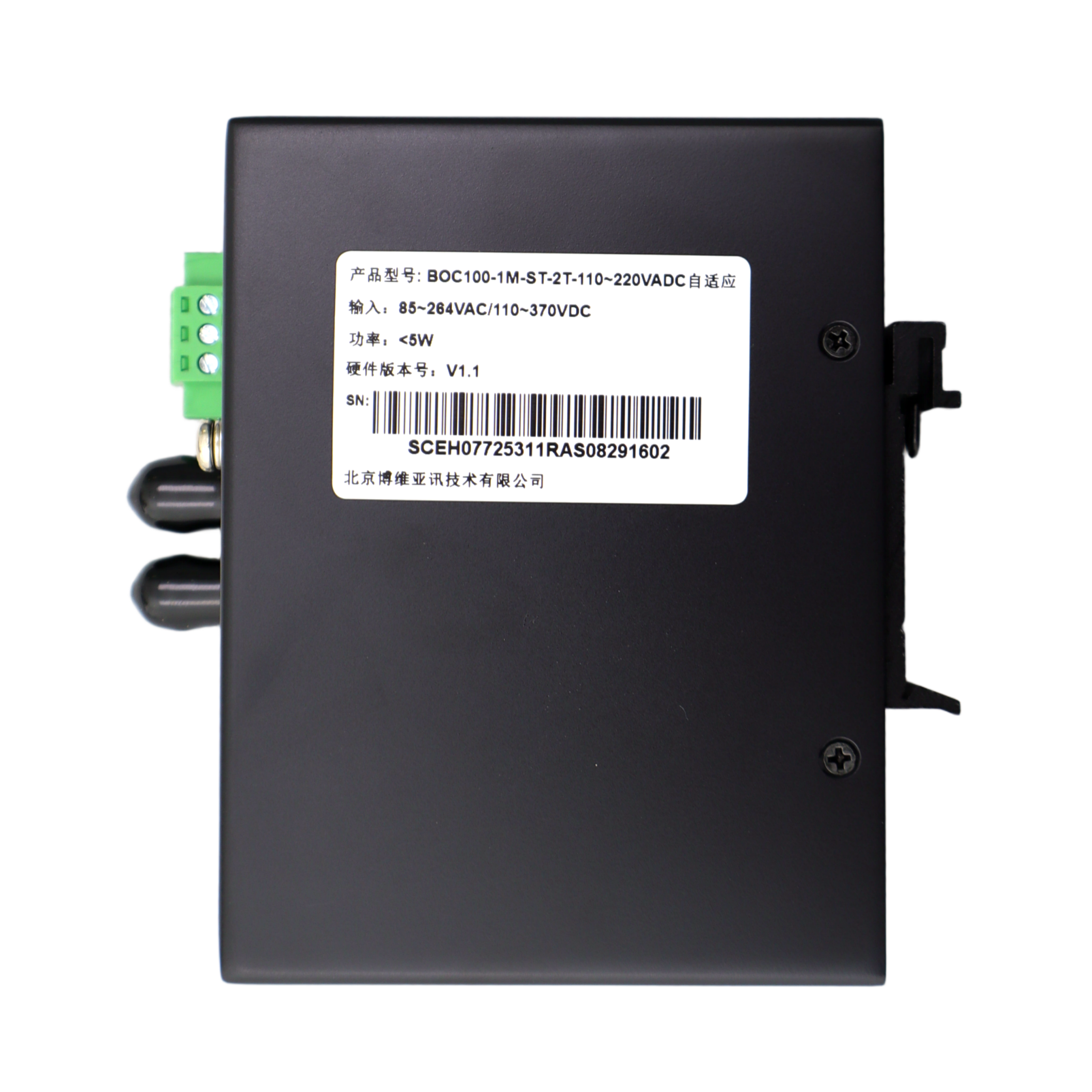
This system consists of three products: a gas fire suppression controller (host), an industrial-grade daisy-chain server, and an industrial-grade Ethernet switch.
In our networking solution, we primarily consider the following aspects:
- The system design fully takes into account the unique characteristics of the monitoring system, adhering to principles that emphasize advanced technology, practicality, and proven reliability—resulting in a comprehensive, feature-rich network communication solution.
- Capable of meeting the demanding physical environment requirements of wind power plants, including temperature, dust resistance, and electromagnetic compatibility.
- The communication solution features a clear, multi-layered architecture that simplifies network maintenance and management from the ground up—starting with the fundamental network structure design. This approach enables rapid identification and isolation of fault points, ensuring stable system operation.
- The communication solution itself must inherently include robust fault-detection and rapid self-healing capabilities, enabling it to perform self-diagnosis and quickly resolve both equipment and link failures, while also providing real-time alerts.
- When performing manual maintenance, capacity expansion, or troubleshooting on the network, efforts should be made to minimize disruption, ensuring that maintenance and scaling activities have no impact on system operations. Similarly, fault repairs should affect only the connected terminals of the relevant network devices, with minimal interference elsewhere.
- Network devices are selected from industrial-grade equipment that offers high real-time performance and exceptional stability.
- The communication networking solution boasts compatibility, enabling seamless connectivity with network devices from different vendors, while delivering excellent value for money.
- Considering the real-time requirements at wind power plant sites, a redundant network design concept is employed to prevent single-link failures from impacting the network.
This solution is based on a comprehensive evaluation of the cost-effectiveness and network reliability of industrial-grade serial servers and industrial Ethernet switches, and accordingly, the following network communication recommendations are provided for the specified sections:
The project is expected to require 50 gas fire suppression controllers, along with a communication data solution as described below: Each gas fire suppression controller will be equipped with one serial server (providing 1 RS485 data port and 1 10/100M adaptive fiber port) to facilitate the conversion of the RS485 data interface into a fiber-based transmission method. Additionally, every 20 serial servers will be connected to an IAS3028-24M-4GXS switch, which offers 24 10/100M adaptive fiber ports and 2 1000M single-mode fiber ports. This communication setup ensures seamless network connectivity and data transmission from the gas fire suppression controllers directly to the Ethernet switches in the power plant. Furthermore, three of these switches are configured with RSTP network redundancy technology, creating a robust Gigabit fiber-optic network that enables rapid self-healing in case of network link failures—taking less than 30 milliseconds. This highly reliable solution effectively safeguards secure and dependable data transmission, allowing all 50 gas fire suppression controllers to communicate in real time by connecting via the Gigabit fiber port of one of the switches to the Ethernet switch at the monitoring and command center.
Network Topology Diagram

Scheme Advantages
- By adopting an industrial-grade redundant network, we ensure both the real-time nature and the reliability of data transmission.
- Industrial-grade chips, industrial-grade power modules, and a low-power design ensure the high reliability of the industrial Ethernet switch system.
- Industrial Ethernet switches have passed Level 4 industrial electromagnetic compatibility testing, ensuring excellent resistance to electromagnetic interference.
Equipment technical specifications and functional features:
- Excellent device features & flexible installation options, with wide-temperature, dustproof, and moisture-resistant designs.
Operating temperature: -40 to 85°C, storage temperature: -45 to 85°C, operating humidity: 0–95% (no condensation); metal enclosure with fanless cooling technology, offering IP40 or higher protection rating; customizable for rack, rail, or wall-mount installations.
- Operating reliably and stably in harsh electromagnetic environments
Through industrial-grade electromagnetic compatibility testing, it effectively defends against industrial interference—including high-voltage AC electric fields, electrostatic fields, arcs, and thyristors—as well as natural disturbances like lightning strikes, various forms of electrostatic discharge, and geomagnetic storms.
- The equipment boasts an average mean time between failures exceeding 300,000 hours and provides spare parts year-round.
- Fast redundancy:
Supports the IEC62439 MRP international standard ring network redundancy protocol, with redundancy protection time less than 20ms, and supports tangent-coupled ring network configurations.
Supports RSTP/STP (IEEE 802.1w/d) redundancy protocols and features advanced loop prevention capabilities, effectively mitigating network storm issues in ring topologies.
- Security Advantages
Supports VLAN (Virtual Local Area Network) technology
VLAN is an essential feature of secure switches. VLANs can span one or more switches, regardless of their physical locations, making devices appear as if they’re communicating within the same network. On a switch, VLANs enable isolation of broadcast domains, effectively dividing the network into independent, discrete areas—and even allow administrators to control whether these areas are allowed to communicate with each other.
Traffic control function
Traffic control in switches can prevent abnormal bandwidth loads on the switch caused by excessive traffic from broadcast packets, multicast packets, and unicast packets with incorrect destination addresses. It also enhances overall system performance while ensuring secure and stable network operations.
Supports port aggregation
Multiple port aggregation not only increases the bandwidth of the link but also provides redundancy protection for the transmission path, while simultaneously ensuring an even distribution of bandwidth.
IEEE 802.1x Authentication Mechanism